Lead generation has become more complex, not because there aren’t enough tools, but because most tools don’t work well together.
You can have strong traffic and a solid offer, but still struggle to convert if your funnel is disconnected. Weak follow-ups, poor qualification, or tools that don’t integrate properly can quietly limit your results.
The problem is usually not a single missing feature. It is how everything works together.
In this guide, we’ve selected 21 of the best lead generation tools for 2026. These tools cover every part of the funnel, from capturing leads and qualifying them to outreach, enrichment, and automation.
The goal is simple: to help you build a lead-generation system that actually converts.
What Lead Generation Tools Actually Fix
A lot of lead generation problems, more often than not, are not really about traffic numbers.
They tend to come from small gaps in your funnel. Things such as slow follow-ups, a weak qualification process, disconnected tools, or just not being able to see clearly which parts are actually working and which are not.
The right tools, if you choose them, can solve those bottlenecks.
Here is where these tools usually make the most difference:
1. Turning Website Traffic Into Real Leads
Getting clicks is one thing entirely, but actually converting those clicks into leads is a completely different challenge.
Landing pages, easy-to-fill-out forms, and on-site capture tools all work together to turn passive visitors into leads who are actually interested by reducing the number of steps and friction and improving their overall experience on the site.
2. Filtering out Prospects Who Do Not Seem Too Interested
Let us be honest, not every lead you get is actually worth your time and effort.
Qualification tools, scoring systems to rank leads, and smarter forms that gather better information help you zero in on the people most likely to become customers. This helps you avoid wasting time on leads that are not going anywhere.
3. Fixing a Follow-Up Process That is Slow or a Bit Inconsistent
It is true that a significant number of leads are lost simply because nobody follows up with them quickly enough.
Automation tools can ensure that every lead is contacted at just the right moment, and this happens without relying on manual intervention or perfect timing, which hardly ever occurs.
4. Making Outreach Efforts Way More Efficient
Trying to do cold outreach without having good data to back it up is basically just a guessing game.
Prospecting and enrichment tools? These can give you the contact information, context about the lead, and other signals that help make your outreach much more focused and more likely to elicit a response.
5. Showing You What is Really Working and What is Not
If you do not have clear data, how can you possibly improve anything?
Analytics and behavior tracking tools will show you where users are dropping off, what parts of your site or funnel are converting well, and which channels are sending you valuable leads. This lets you optimize everything based on actual data, not just what you think is happening.
6. Connecting Your Entire Funnel System
Most teams do not lack tools. The problem they do have lies in the lack of connection between those tools.
And the biggest improvements often come when you link your landing pages, your CRM, your outreach efforts, and all your automation tools into one system where everything works well together and shares data.
If you’re looking for actionable strategies to go alongside these tools, check out our guide on lead generation ideas.
How to Choose the Right Lead Generation Tools
Not every one of these tools I am about to mention will be a good fit, and that is really the idea.
You will get the most success if you pick and choose the tools that address the problems you are actually facing, rather than going for an all-in-one solution and hoping to use it all at once.
Start With the Problem, Not the Tool
Before you pick anything, take a second and figure out what is missing with where you are right now.
Are you after better conversion numbers, better leads, or a faster follow-up process?
Try to solve just one problem, get that sorted, instead of falling into the trap of looking for the miraculous jack-of-all-trades tool that claims to do everything perfectly.
Make Sure Your Tools Work Together
Data gets lost, and things just do not run smoothly when your tools do not talk to each other.
So make sure that whatever tools you end up choosing integrate easily with your landing pages, your CRM, and whatever you are using for outreach; that way, it all works together in one fluid motion.
Think About Where You’re Going, Not Just Where You Are
Some of these tools are great when you are starting out, but as you get bigger, they might hold you back.
Consider pricing, usage limits, and flexibility. It is better to do that now than to tear it all apart and rebuild it later.
Choose Simplicity Over Feature Overload
The tool that does the best for you is the one your team will actually use.
A design that is clean, easy to use, and with straightforward onboarding is more effective than a tool with every feature under the sun.
Track What Actually Matters
You need to be able to measure how things are going without any ambiguity.
Keep an eye on metrics like conversion rates, the cost of your leads, and how the funnel performs, so you can make changes based on real data in front of you, not just guesswork.
Comparison of the 21 Best Lead Generation Tools
Best Lead Generation Tools by Use Case
If you’re not sure where to start, here’s a quick breakdown based on specific use cases:
- Best for AI landing pages and quiz funnels: LanderLab
- Best for converting website traffic: OptinMonster
- Best for interactive lead capture: Typeform
- Best for video-based lead engagement: VideoAsk
- Best for B2B lead generation: Apollo.io
- Best for data enrichment and outbound workflows: Clay
- Best for cold outreach: Mailshake
- Best all-in-one platform: HubSpot
- Best for email marketing: Mailchimp
- Best for creators and monetization: Kit
- Best for scheduling and conversions: Calendly
- Best for analytics and user insights: Hotjar
21 Best Lead Generation Tools & Software Listed
1. LanderLab – AI Landing Page and AI Quiz Maker Tool
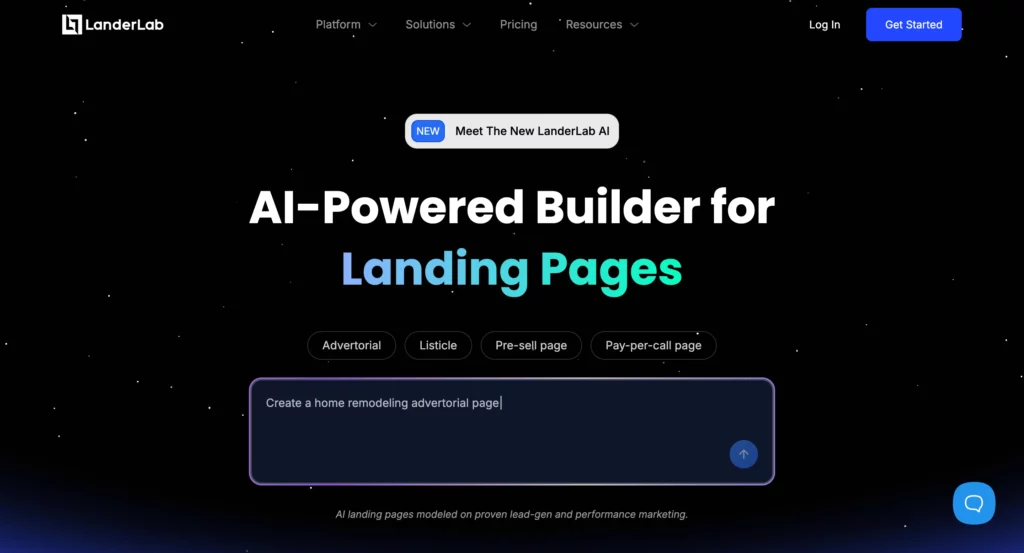
LanderLab is an AI-powered landing page builder focused on lead generation.
Instead of always starting from a blank slate, you are able to use AI to generate landing pages and even quiz funnels fast – like, in minutes.
This gets rid of some common problems with design, copywriting, and even images.
It makes it easier to turn an idea into a live campaign without involving developers.
Here is what an AI landing page generated looks like in LanderLab:
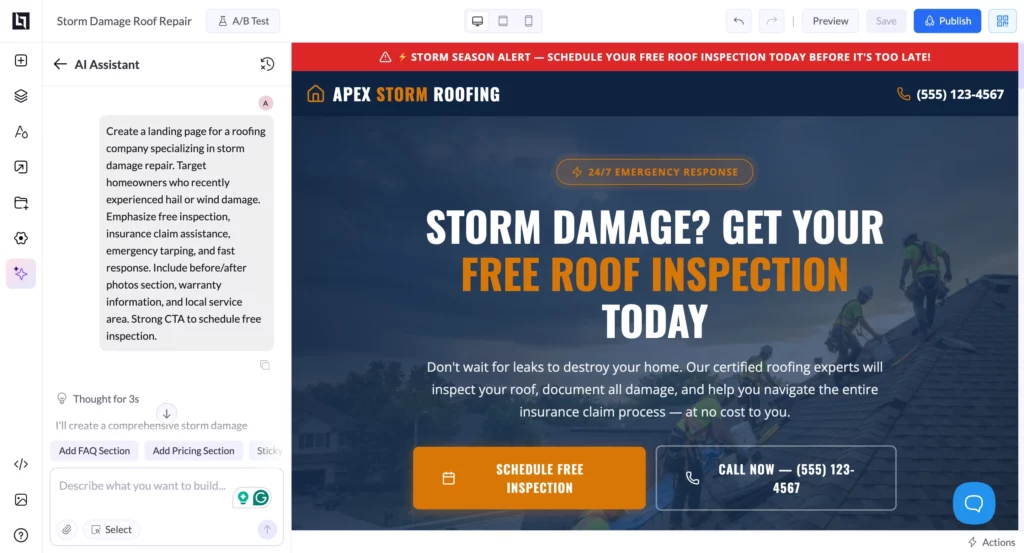
You enter the prompt, and the landing page will be generated within a minute.
You still can build pages the old-fashioned way manually with the drag and drop builder or using templates or from scratch, but the real advantage comes from combining AI with proven lead-generation structures such as multi-step forms, conditional logic, and A/B testing.
LanderLab includes an AI-powered quiz maker.
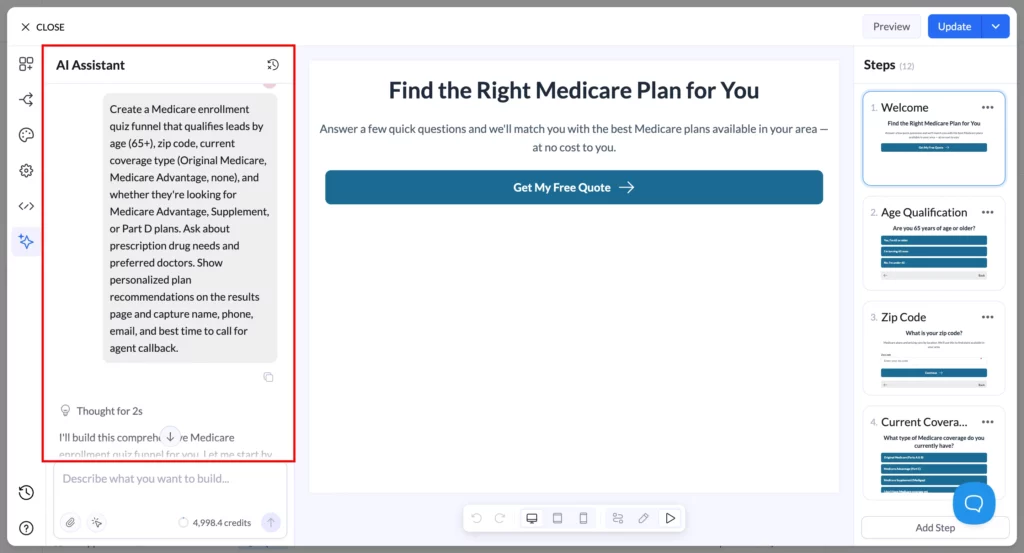
Again, the logic is the same as for the landing page creation: you enter the prompt (the more specific, the better the result), and the AI will create an entire quiz with images, even with conditional logic.
It does not stop there.
Beyond helping to create pages, LanderLab is designed for the entire lead-generation process. It connects directly to lead distribution systems like LeadsPedia, Phonexa, and Zapier.
LanderLab also goes a step further with a built-in CRM and AI lead insights.
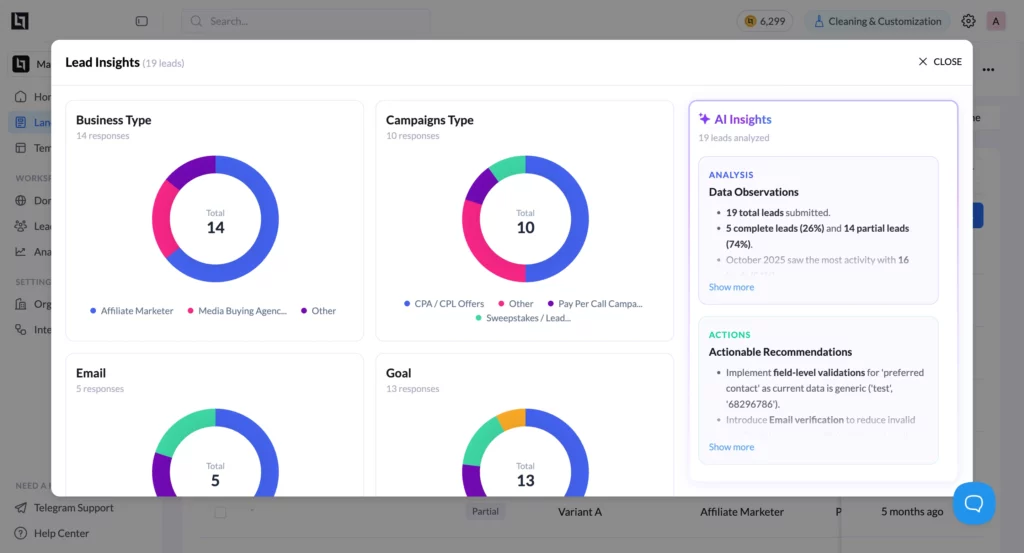
This allows you to track, manage, and understand your leads in one place, while AI surfaces patterns, identifies high-intent prospects, and improves decision-making without relying on external tools.
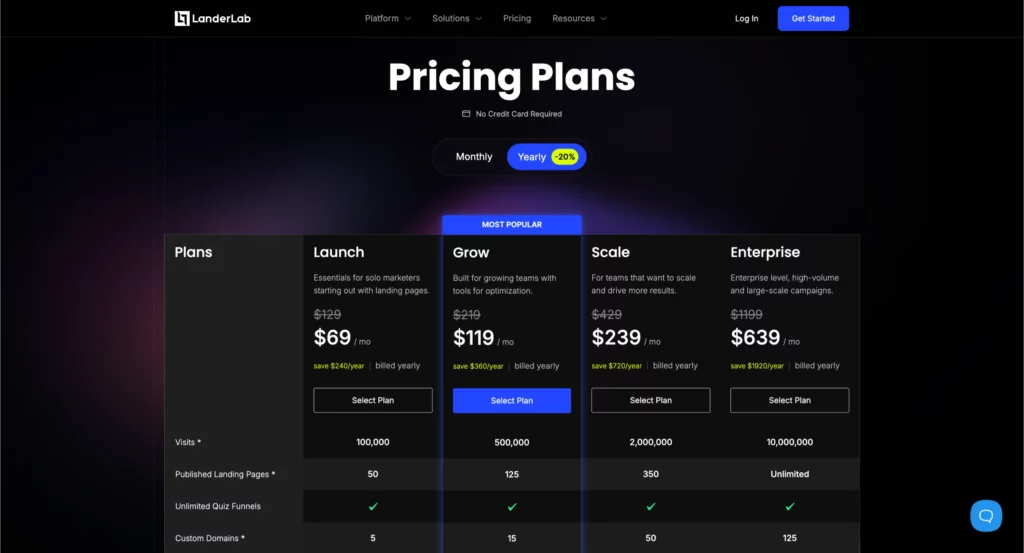
LanderLab’s pricing starts at $89 per month for a month-to-month plan.
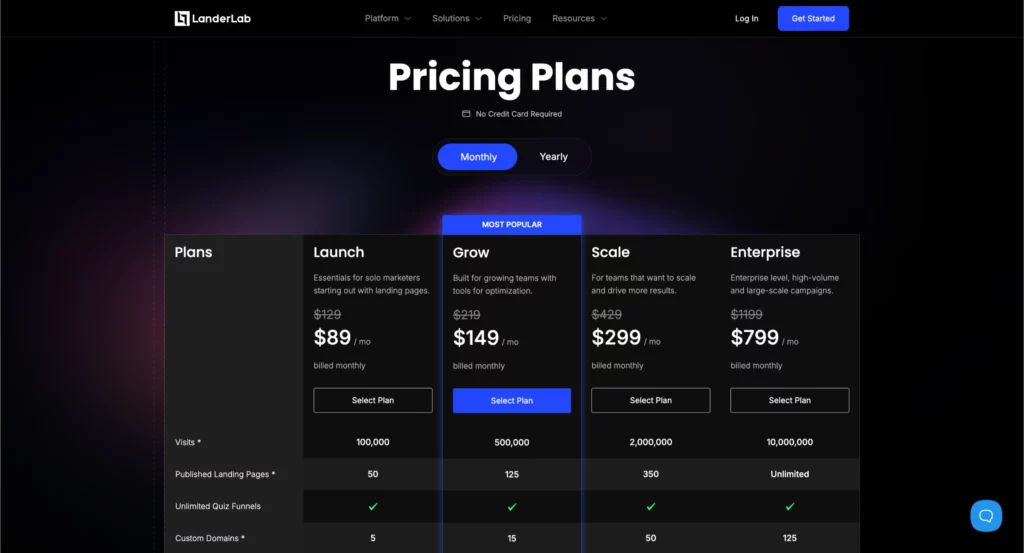
But annual plans are offered. If you sign up for a year, the price drops to $69 a month, with the ability to import landing pages, use custom domains, and handle enough traffic to scale your campaigns.
Here Is What Makes LanderLab Different:
✔ AI Landing Page Generation: Build pages quickly that are designed to convert well, instead of doing everything manually.
✔ AI Quiz Maker: Build interactive funnels that engage users and qualify leads automatically.
✔ Unlimited Quiz Funnels: Launch and scale as many quiz funnels as you need without restrictions.
✔ Unlimited Leads and Conversions: No caps on how many leads you capture or conversions you generate.
✔ Built-in CRM + AI Lead Insights: Track, manage, and analyze leads in one place with AI-powered insights.
✔ Built for Lead Generation: The AI is trained on real lead-gen, such as advertorial landing pages, solar, roofing, etc.
✔ Page Importing: Import any landing page just by using the URL, and then customize it however you want.
✔ Direct Lead Distribution: Integrates directly with platforms like LeadsPedia and Phonexa, & many more, so you do not need any middleware.
Every plan includes a complimentary 7-day trial, with no credit card required.
Ready to Launch AI-Powered Landing Pages That Convert?
Start your free 7-day trial with LanderLab and create high-converting pages and quiz funnels in minutes, no coding required.
2. OptinMonster
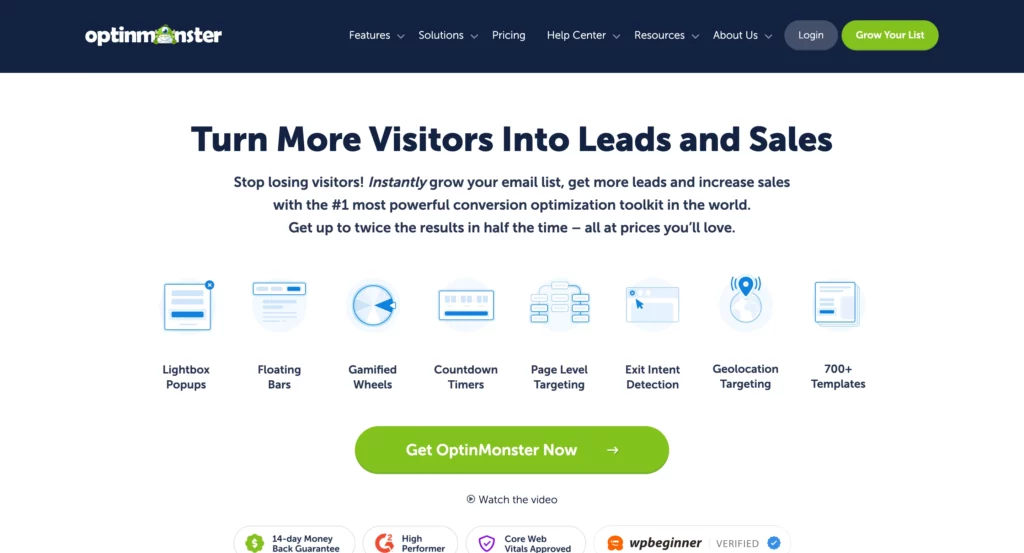
OptinMonster is a tool designed for conversion optimization. It’s meant to help you turn the website traffic you currently have into actual leads and then into paying customers.
Instead of focusing so much on building web pages, it sits on top of your current site, using popups, slide-ins, floating bars, and full-screen overlays to capture attention at just the right moment.
Its real strength is in behavior-based targeting.
You are able to trigger campaigns based on user actions, such as when someone is about to leave your site (exit intent), how far down the page they have scrolled, the length of time on a page, or actions they have taken previously, allowing you to show the correct message to users when they are most likely to do what you want them to do convert.
OptinMonster makes it straightforward to launch campaigns and begin testing them with its drag-and-drop builder.
There is also built-in A/B testing and performance analytics. This lets you keep refining your messaging and improve your conversion rates without having to rework the entire sales funnel.
It integrates with most email marketing platforms and CRMs, making it a flexible addition to pretty much any lead-generation setup.
Here is Why OptinMonster Stands Out:
✔ Created for Conversion Optimization: It is designed to get the most value possible from your present traffic, not just to bring in new visitors.
✔ Behavior-Based Targeting: Campaigns can be triggered based on what the user does, like when they try to leave (exit intent), how far down a page they scroll, and their overall engagement with the site.
✔ Variety of different Campaign Types: It uses popups, slide-ins, floating bars, together with full-screen overlays to handle a number of conversion situations.
✔ Testing and fast Iteration: Built-in A/B testing helps you to optimize your messaging, design, and timing.
✔ Integrations are Flexible: It works with most email platforms and CRMs, making it straightforward to plug into your current system.
3. Hunter.io
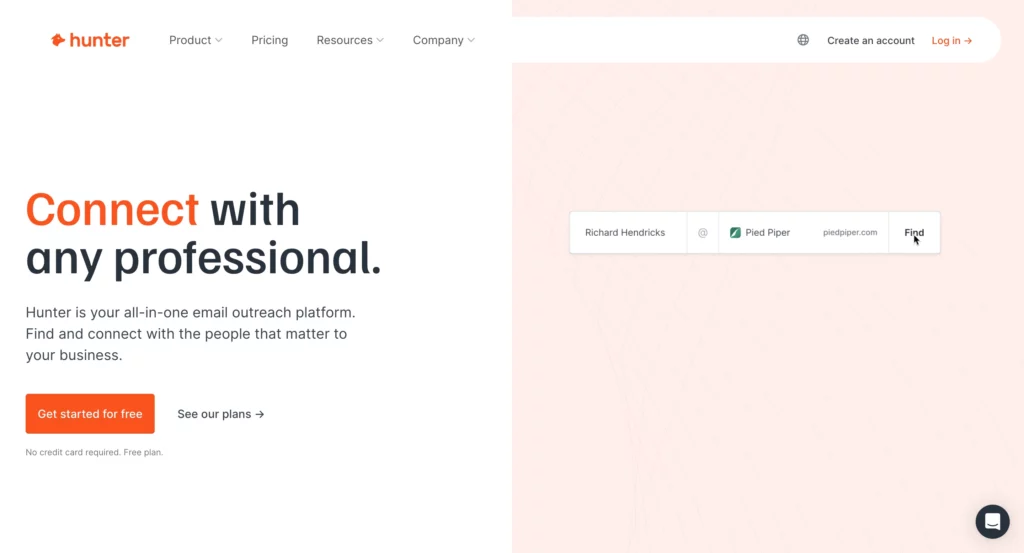
Hunter is a powerful email discovery tool that helps marketers and salespeople find verified email addresses associated with any company domain. Hunter is instrumental in generating outbound leads, B2B prospecting, and cold emailing.
With Hunter, you can search for a domain and download a list of public email addresses for the company, with confidence levels and sources. A Chrome extension is also available for real-time email search across LinkedIn and company websites.
Hunter’s Email Verifier keeps your outreach lists organized, and the Campaigns feature enables you to automate and personalize follow-up sequences within Hunter.
Why Hunter.io Stands Out:
✔ Verification Confidence System: Each email comes with accuracy scores and verification sources, protecting your sender reputation.
✔ Bulk Domain Processing: Extract entire company email lists in minutes, not hours of manual research.
✔ Real-Time Browser Extension: Find contacts while browsing LinkedIn or company websites without context switching.
✔ Compliance Protection: Email verification reduces bounce rates and keeps your outreach campaigns out of spam folders.
4. Typeform
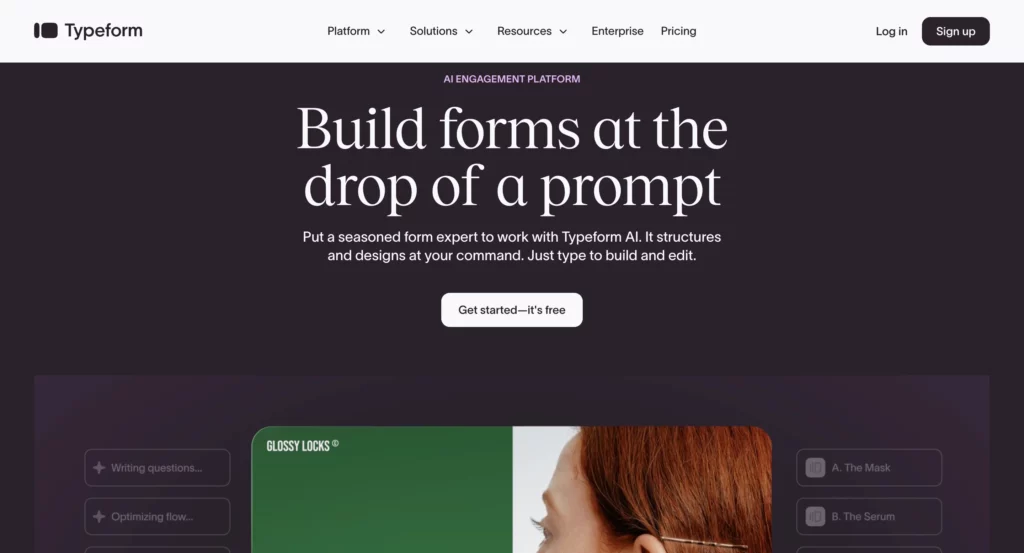
Typeform is a tool for building interactive forms and quizzes. It’s meant to make lead collection feel more like a conversation rather than just throwing a standard form at someone.
Instead of overwhelming people with a long list of fields all at once, Typeform shows one question at a time.
This method usually means more people actually finish the form, and the whole experience is better, particularly when people are using their phones.
It is really useful for things like multi-step lead generation, onboarding new users, and creating quizzes, where keeping people interested and making it personal are important.
With features like logic jumps, answer piping, and conditional flows, you can tailor the experience for each user based on their answers.
Typeform has also added AI-powered form creation. This lets you quickly make forms, write questions, and design flows, based on what you want to achieve.
It helps reduce the time required to set everything up and makes it simpler to get optimized lead capture running without starting from scratch.
Even though it is not a complete landing page builder, it works well as part of a larger system, particularly if you are using tools to get traffic, build landing pages, and follow up with leads.
What Makes Typeform Stand Out:
✔ A Conversational Form Experience: Asking one question at a time keeps people more engaged and boosts completion rates.
✔ AI Form Creation: Create forms, questions, and flows more swiftly with AI help.
✔ Designed for Interactive Lead Capture: Great for quizzes, onboarding processes, and funnels that have multiple steps.
✔ Personalization Based on Logic: Using conditional logic and answer piping, you are able to design user journeys that are customized.
✔ Mobile-First Design: Made to work best for how people use their phones today and smaller screens.
✔ Powerful Integrations: Connects to CRMs, email platforms, and other tools like Zapier, HubSpot, or Google Sheets. There are so many options now.
While it is not a full landing page builder, it fits well into a broader funnel, especially when combined with tools for traffic acquisition and follow-up. If you’re looking for more flexible or conversion-focused options, check out our guide to the best Typeform alternatives.
5. LinkedIn Lead Gen Forms
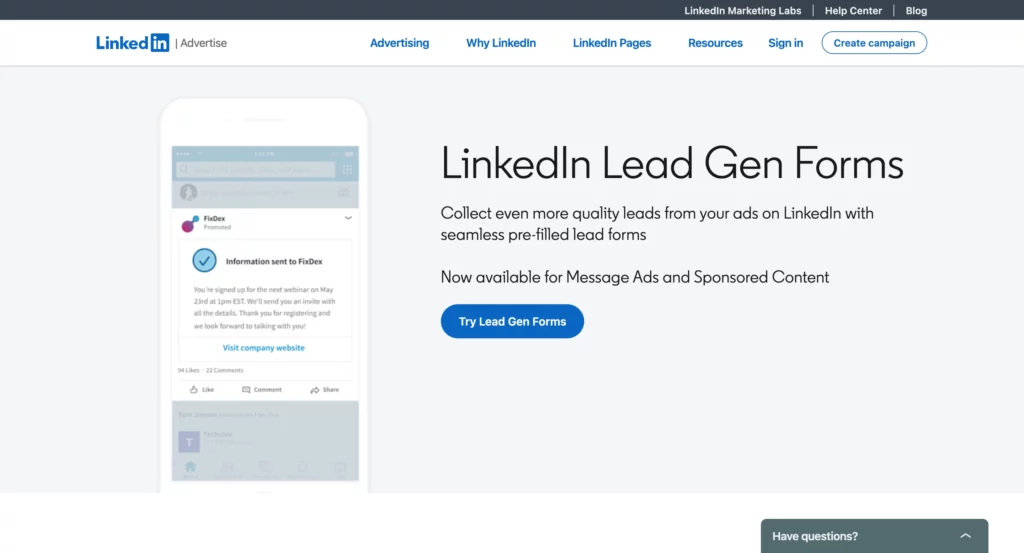
LinkedIn Lead Gen Ads use built-in Lead Gen Forms to capture high-quality B2B leads directly within the LinkedIn platform, without sending users to an external landing page.
When someone clicks the ad, a form pops up pre-filled with their LinkedIn information. What this does is make things easier, and it will make it even easier for prospects to submit their information; it only takes a few clicks.
These types of ads are really effective for offers such as demo requests, webinar sign-ups, and gated content. In these cases, getting the right audience really counts more than just getting a high volume of leads.
So, instead of trying to get a lot of clicks, you are working to get good leads.
The targeting is what makes LinkedIn Lead Gen Ads so powerful.
You can target users by job title, company size, industry, seniority level, and even specific accounts, and this is one of the most precise ways to generate B2B leads.
Leads can be synced instantly with your CRM or marketing setup. This makes for faster follow-up and usually better conversion rates.
Why LinkedIn Lead Gen Forms Are Really Good:
✔ Lead Capture Without the Hassle: Because the forms are pre-filled, people do not have to work as hard, and conversion rates go up.
✔ B2B Audience With Clear Intent: You can reach those professionals who already have a business focus.
✔ Targeting That Is Really Advanced: You can filter by job title, company size, industry, and seniority, among other things.
✔ Conversion Happens Right There: Leads are captured without sending users away from the LinkedIn feed, which is good.
✔ Syncing Leads in Real Time: Leads are automatically sent over to your CRM or email platform so you can follow up right away.
6. Kit
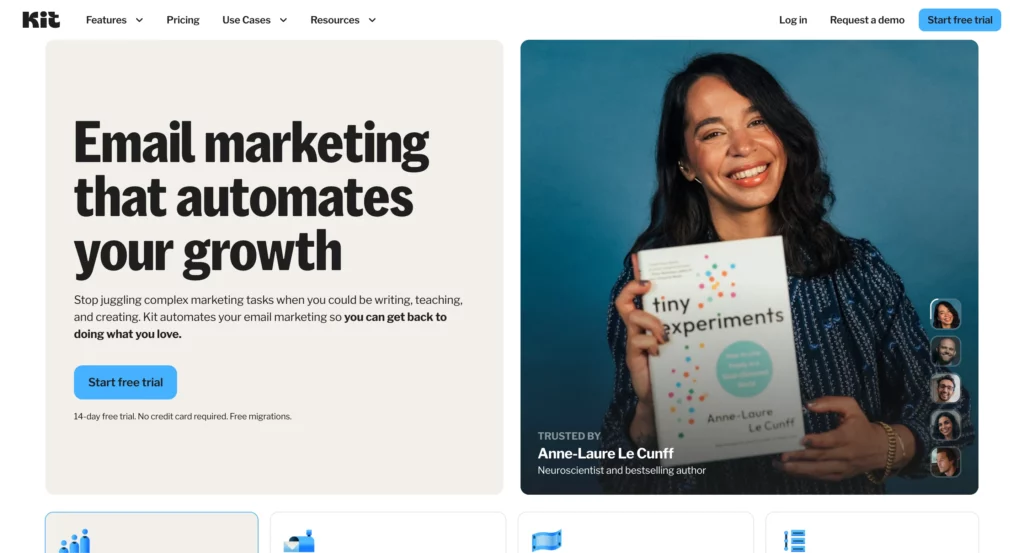
Kit, previously known as ConvertKit, is an email marketing and monetization platform. It is built specifically for creators, coaches, and online business owners. These kinds of businesses tend to grow through building an audience.
Now, unlike your more traditional email tools, Kit is really focused on helping you turn those subscribers into actual paying customers.
It combines your email marketing, landing pages, automation, and even has built-in commerce features, all in one platform.
This way, you can manage your audience and revenue in the same place.
You can create opt-in forms, landing pages, and automated email sequences.
These can be connected through visual workflows based on subscriber behavior, which makes things easier. With this, it becomes easier to nurture leads, segment your audience, and deliver more personalized campaigns.
Also, Kit has introduced a generous free plan. It supports up to 10,000 subscribers, making it one of the more accessible tools for creators just getting started.
However, what probably makes Kit stand out the most is this built-in monetization and growth system.
You could sell digital products, subscriptions, and even paid newsletters directly through the platform. Also, features like the Creator Network and recommendations help you grow your audience through cross-promotion with other creators.
It appears they are continuing to expand the ecosystem with more automation templates and an app store, making it easier to launch campaigns and connect with other tools you may use.
Whilst Kit is clearly not designed for very complex B2B funnels, it is one of the stronger options out there for creators. If you are someone looking to grow, and then monetize along the way, your audience, it could be a platform to consider.
Why Kit Stands Out:
✔ Is built for Creators: Designed for audience-first businesses, such as individual creators, coaches, and solopreneurs.
✔ Free Plan up to 10,000 Subscribers: It has one of the most generous entry points in email marketing at the moment.
✔ Email plus Monetization in One: You can sell digital products, subscriptions, and newsletters all without needing other extra tools.
✔ Automation Templates: You can launch email funnels faster. Pre-built workflows for common use cases can help you.
✔ Creator Network and Recommendations: It allows you to grow your audience through cross-promotion and referrals.
✔ A visual Automation Builder: Should allow you to create behavior-based email sequences with an intuitive workflow editor.
✔ It has Strong Deliverability: High inbox placement should ensure your emails actually get seen.
✔ Expanding Ecosystem: The App store and integrations can connect your entire creator stack.
7. Calendly
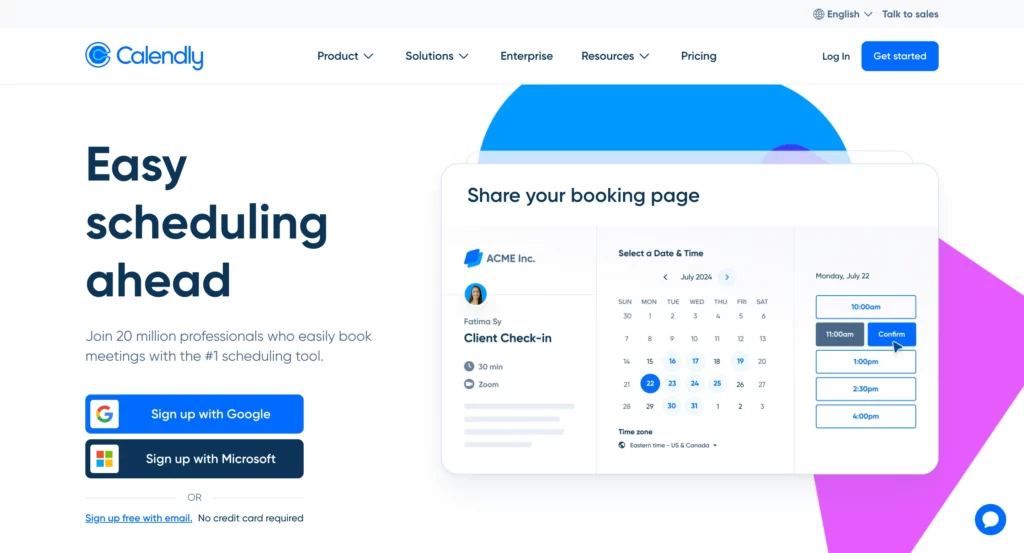
Calendly is a scheduling and lead conversion tool that takes some of the pain out of booking and turns people who are possibly interested into actual meetings faster.
Instead of sending emails back and forth a bunch of times, you can share a booking page just for you that shows when you are free in real time.
People who want to book something can pick a time that works for them, and the meeting is automatically scheduled. It even figures out time zones, sends reminders, and syncs with your calendar.
Calendly has changed, becoming more than a simple scheduling tool; it is now more of a conversion tool overall.
You can qualify leads with booking questions, route them to the right person on your team based on specific rules, and even take payments right when someone schedules time with you, which can be useful for consultations or services.
This seems extra good for booking demos, sales calls, and businesses that sell services, where doing things quickly and being convenient really makes a difference in how many people actually become customers.
Why Calendly Stands Out:
✔ Booking without the Hassle: Gets rid of the back and forth and turns interest into scheduled meetings faster, which is what you want.
✔ Smart Lead Routing: It can automatically assign meetings, based on the answers the prospect gives, where they are located, or the rules your team uses.
✔ Qualification built right in: You can use questions before the meeting to filter out and focus on the leads that are most promising.
✔ Team Scheduling Options: It lets teams use round-robin type scheduling and collective scheduling options for sales and support teams.
✔ Payments During Booking: Take payments directly when the booking happens for, consultations, services, or sessions.
✔ Workflow Automation: Everything is automated, like reminders, follow-ups, and ways to cut down on no-shows.
8. HubSpot
HubSpot is a customer platform that tries to do it all: lead capture, CRM, marketing automation, sales tools; it puts them all together in one system so you can manage your whole funnel.
With HubSpot, you can grab leads through forms, pop-ups, chatbots, and even live chat. All that is directly connected to a CRM that is built into the system.
After you capture those leads, they can be automatically organized based on behavior and their position in the sales process.
What makes HubSpot stand out? It is the ability to connect every single step of the customer’s journey, so from that first visit to your website, all the way to becoming a customer.
All those interactions, they are tracked in one place, so teams can see what is working, and where leads drop off, allowing for course correction.
HubSpot has also been getting into AI and offers tools to make content, automate workflows, and get insights across marketing and sales.
Hopefully, this helps teams move faster and make smarter choices without needing a whole bunch of different tools, which can be a problem.
It can get expensive, particularly as you get bigger, so that is something. But it is still one of the more complete solutions you will find if your team wants to handle lead generation, nurturing, and sales all in the same platform.
Why HubSpot is a good choice:
✔ All-in-One Customer Platform: CRM, marketing, sales, and automation all in the same system.
✔ AI-Powered Automation: Make content, automate workflows, and understand what’s happening with built-in AI tools.
✔ Complete Funnel Visibility: Track every interaction, from the first visit all the way to closing the deal.
✔ Advanced Lead Management: Segment, score, and automatically route leads based on their actions.
✔ Progressive Data Collection: Smart forms use the user’s existing data to customize the experience.
✔ Strong Attribution & Reporting: See which channels and campaigns drive real revenue, and how to replicate it.
9. Hotjar
Hotjar, which is now part of Contentsquare, is a behavior analytics tool. It’s designed to help you get a handle on how users are actually interacting with your website, and, more importantly, where people are dropping off in your conversion funnel.
The tool gives you heatmaps, session recordings, and on-page surveys. With these features, you can see, specifically, how visitors move through your pages, those places where they seem to get stuck, and also what might be stopping them from actually converting.
When it comes to lead generation, this kind of insight is really critical. Instead of just guessing what needs improvement, you can pinpoint the exact friction points in your forms, landing pages, and user flows.
You can then optimize things based on real user behavior and direct user feedback, which is always better than just guessing.
Hotjar is particularly useful for boosting conversion rates once you are already getting traffic, making it a key tool for optimizing existing funnels. It is not really about generating entirely new leads in the first place.
Why Hotjar Stands Out:
✔ Insights Through Visuals: Heatmaps and session recordings show exactly how users use your pages.
✔ Finding Friction: You can identify where users abandon forms or exit your funnel.
✔ Real Feedback: You can collect insights by using on-page surveys and those feedback widgets.
✔ Mobile Optimization: Essential to understand how your users behave across different devices, especially mobile phones.
✔ Optimization Focused on Conversion: Improve layouts, copy, and flows based on actual behavior, instead of just assumptions.
10. Mailshake
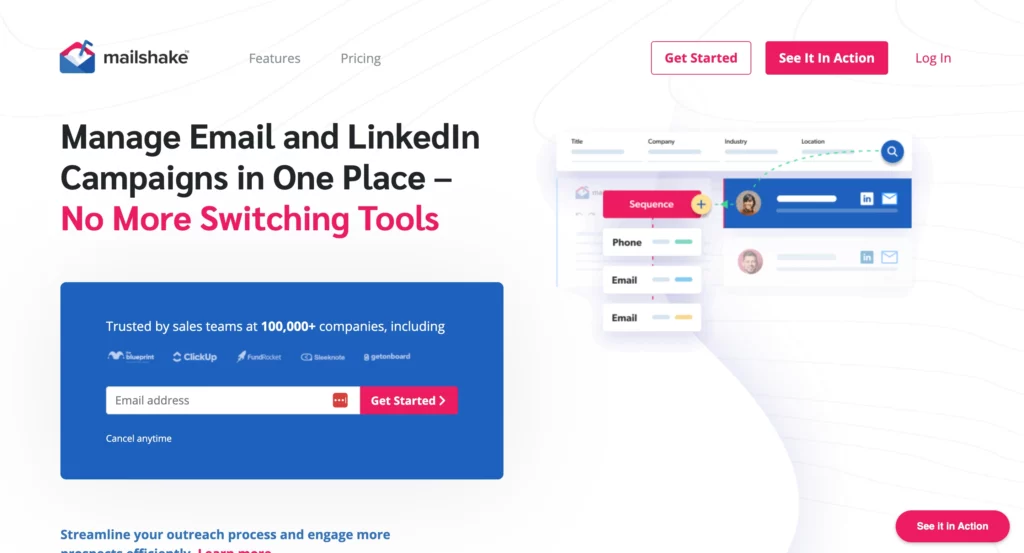
Mailshake is a sales engagement and cold outreach platform designed to help teams generate leads via email, phone calls, and even LinkedIn. The idea is to do this in a structured way that can be scaled up as needed.
The platform lets you create focused outreach sequences and automate those follow-up messages. You can also manage all your conversations from a single dashboard.
This makes it simpler than you might think to keep outbound campaigns running steadily without doing a ton of manual work.
Mailshake also has an AI assistant. That is supposed to help you come up with and improve cold email copy, subject lines, and follow-ups, which cuts down on the time it takes to get campaigns off the ground while hopefully making the messages more personalized.
A big deal is made about deliverability. Features like automated email warm-up, domain health monitoring, control over sending cadence, and an email analyzer help ensure your emails reach inboxes rather than going straight to the spam folder.
This analyzer scans your emails for elements that might trigger spam filters and offers advice on how to make them more likely to be delivered and more readable.
With tools such as Lead Catcher for managing replies, multi-channel sequences, CRM integrations, and a built-in dialer, Mailshake seems geared towards teams doing outbound sales on a larger scale.
It’s important to be aware that Mailshake does not include its own lead database. It works best when paired with prospecting tools.
Here’s What Makes Mailshake Different:
✔ Outreach Help From AI: Create and make better cold emails, subject lines, and sequences faster than doing it all yourself.
✔ Tools to Help Deliverability: Warm-up features, domain, monitoring, and spam checks help keep your sender reputation in good standing.
✔ Email Analyzer Included: Find spam risks and boost email performance before you hit send, and avoid deliverability issues.
✔ Sequences Across Multiple Channels: Include email, phone, and LinkedIn outreach all in one workflow that is integrated to each other.
✔ System to Manage Replies: Sort through responses automatically and set off the next steps that need to happen.
✔ Made For Outbound Teams: This platform is designed for consistent lead generation that can be scaled up through strategic outreach.
11. Intercom
Intercom is a conversational engagement platform. It is designed to capture, qualify, and convert leads into customers through real-time messaging powered by artificial intelligence.
Fin, Intercom’s AI agent, is at the heart of it. It can answer questions and qualify leads.
And it can automatically guide users through conversations. The agent works all day and night, handling a substantial amount of interactions without needing a human to get involved. But it will hand things off to your team when that is needed.
With Intercom’s chat widget, you can engage with visitors based on what they do, such as the pages they visit, how long they spend on the site, or actions they might have taken.
This makes it possible to kick off conversations at the right time and move users toward becoming paying customers without them having to take the first step.
Beyond chat, Intercom offers ways to enhance the product experience directly, such as onboarding flows, product tours, and proactive messaging. This is particularly useful for SaaS companies and other businesses with longer sales cycles to manage.
Intercom, with advanced routing, CRM integrations, and a unified inbox, makes it easier for teams to manage multiple conversations.
They can do it at scale while still giving each customer a personalized experience.
Why Intercom Stands Out:
✔ AI Agent (Fin): Automates conversations, answers questions, and qualifies leads as things happen.
✔ Behavior-Based Engagement: Messages can be triggered by what a user does, and by signals of their intent.
✔ Real-Time Lead Qualification: Start engaging with visitors and qualify them before they leave your website.
✔ Human + AI Handoff: It is easy to switch from automated conversations to your sales team, without a hitch.
✔ In-Product Experiences: You can create product tours, onboarding flows, and proactive messaging for more engagement.
✔ Built for SaaS & Scale: It is ideal for teams that need to handle a lot of conversations and have long sales cycles.
12. Mailchimp
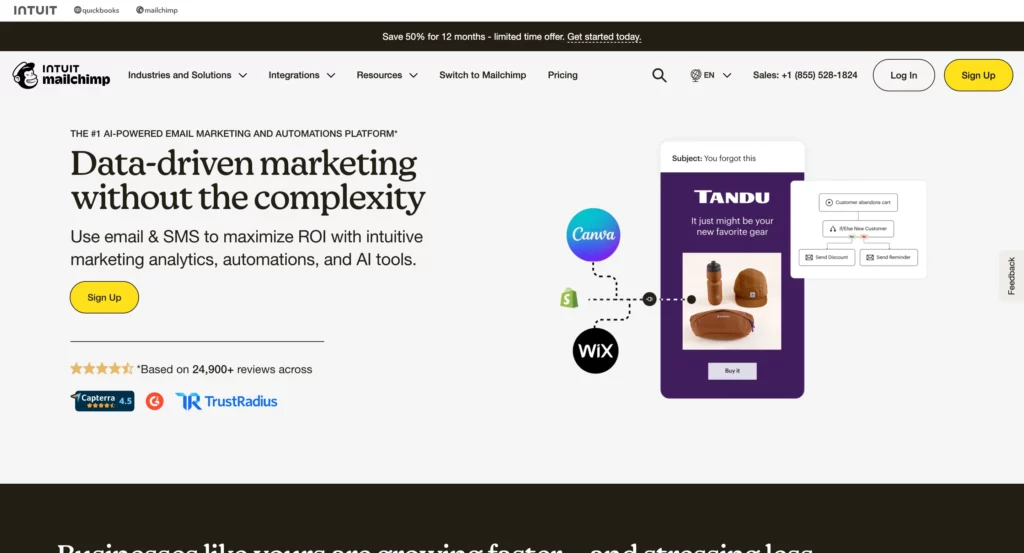
Mailchimp is a marketing platform; it is an all-in-one solution that is focused mainly on helping smaller businesses and teams handle their email marketing, and things like automation, plus all sorts of customer communication, all from the same interface.
It brings together a few different things, like lead capture tools, email campaign management, and multi-channel options, letting you develop and cultivate your audience with all sorts of forms, landing pages, even popups, and those automated customer journeys you may have heard of.
One of Mailchimp’s strongest selling points is probably its inherent flexibility, and that is good. Setting up automated email sequences can be done based on customer behavior.
Plus, you could also choose to segment audiences, which helps deliver highly personalized campaigns while still maintaining scale when broadcasting.
It also has some AI features these days, which is a nice touch: it can help come up with the actual email content, suggest decent subject lines for those emails, and even optimize when the best time to send them is.
It is all designed to try and boost performance without all that constant manual tweaking that can be tedious
But Mailchimp does not only do email, not at all.
It supports a broader marketing strategy that includes ads, integrations, and e-commerce tools. You have features such as product recommendations for your store and abandoned-cart recovery processes.
This makes it useful for small, new businesses as well as medium-sized online shops.
It does scale up without too much trouble; that is a plus. But the pricing can creep up on you, once your mailing list gets bigger, so it is something you need to think about for the long haul.
What Makes Mailchimp a Good Choice?:
✔ All-in-One Marketing Platform: It is all your emails, automation, plus campaigns across multiple channels, contained in one piece of software.
✔ AI-Powered Optimization: Built-in AI capabilities help generate content and determine optimal sending times.
✔ Customer Journey Builder: You can build automated workflows, tailoring them to the way a user behaves, as well as looking at their stage within a typical lifecycle
✔ Advanced Segmentation: You are targeting users based on what they did or purchased, or on general engagement.
✔ Ecommerce Integration: It has product recommendations, which is great, and abandoned cart flows, all ready to go for online stores.
✔ Very Flexible for SMBs: Ideal for the kinds of small businesses out there who just need an easy-to-pick-up marketing solution.
13. Pipedrive
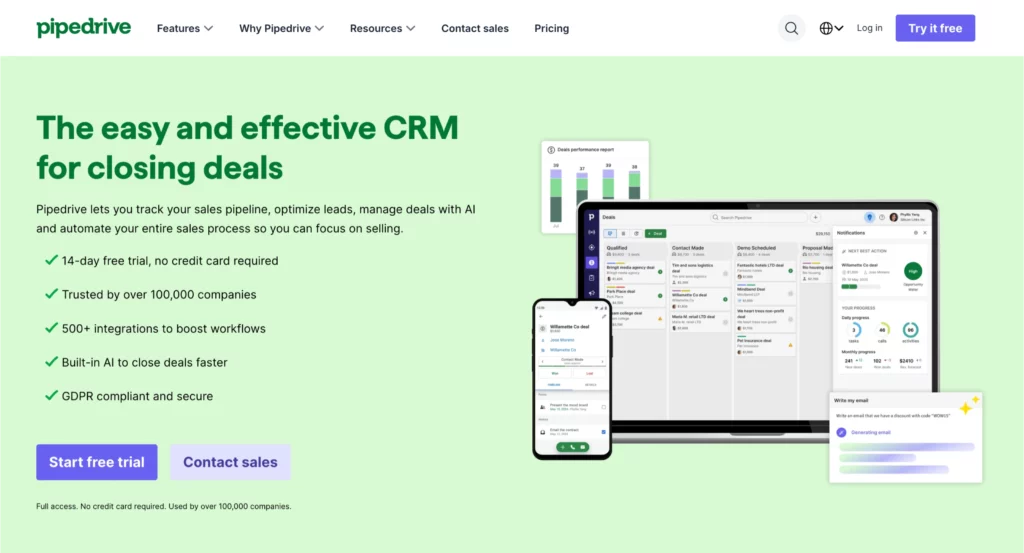
Pipedrive is a sales-focused CRM built to help teams capture, manage, and convert leads through a simple, visual pipeline.
With built-in lead capture tools like web forms, chatbots, and live chat (via the LeadBooster add-on), you can collect leads directly from your website and push them straight into your sales pipeline.
Once captured, leads can be automatically assigned, tracked, and followed up on using workflows, ensuring no opportunity slips through the cracks.
Pipedrive’s strength lies in its simplicity. The visual pipeline makes it easy to see where each deal stands, while automation handles repetitive tasks like follow-ups, reminders, and lead routing.
As your needs grow, you can extend functionality with add-ons for email marketing, prospecting, and identifying anonymous website visitors, making it a flexible system that scales with your outreach.
Why Pipedrive Stands Out:
✔ Visual Pipeline Management: Track every lead and deal with a clear, drag-and-drop interface.
✔ Built-In Lead Capture: Collect leads through forms, chat, and chatbots directly into your CRM.
✔ Workflow Automation: Automate follow-ups, assignments, and repetitive sales tasks.
✔ Scalable Add-Ons: Expand with tools for prospecting, email campaigns, and visitor tracking.
✔ Simple and Easy to Use: Designed for fast adoption without complex setup.
14. Leadfeeder
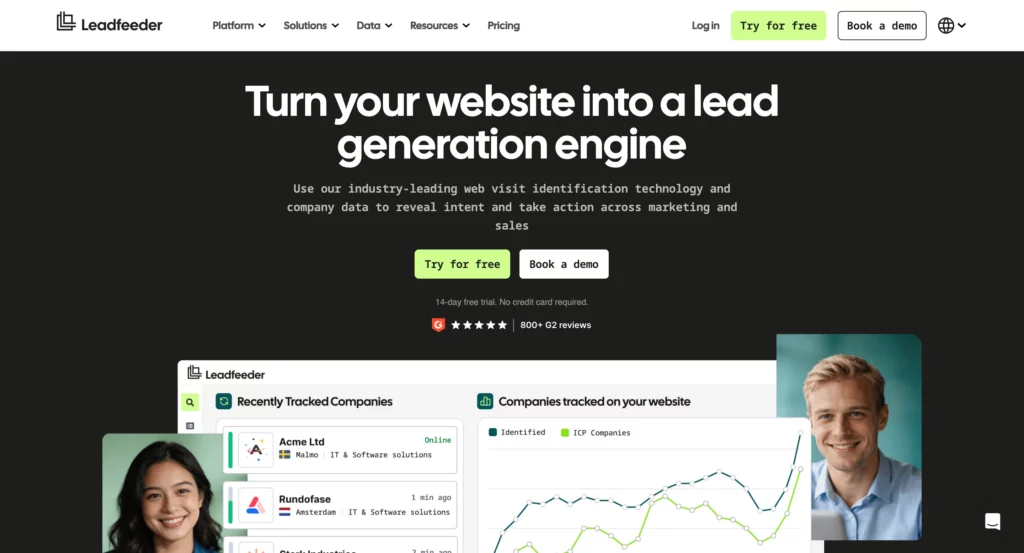
Leadfeeder, which is now part of Dealfront, is a B2B lead intelligence tool. It helps you figure out which companies are visiting your website, even if they do not fill out a form.
So instead of relying solely on inbound conversions, Leadfeeder turns anonymous web traffic into opportunities you can act on. It does this by showing you which companies are browsing your site, including the pages they visit, and how engaged they are.
Once Leadfeeder is connected to tools such as Google Analytics and your CRM, it will automatically show the high-intent companies.
It will send you real-time alerts and let you segment leads. Segmentation can be based on behavior, industry, or location, and there are more options.
This feature makes Leadfeeder particularly valuable for sales teams. Because it lets sales reps reach out to prospects while they are actively researching the product, rather than making reps wait for them to convert through typical means.
While Leadfeeder does not provide direct contact information on its own, it is most effective when used with other prospecting or outreach tools. This is how you turn the identified companies into actual conversations.
Why Leadfeeder Stands Out:
✔ Identify Anonymous Visitors: Find out which companies are visiting your website, even before they convert through a form or other method.
✔ Intent-Based Targeting: With this, prioritize leads based on the pages that they viewed, plus their engagement signals.
✔ Real-Time Alerts: You can get notified when high-value accounts visit key pages. Examples of those pages include pricing or demo pages.
✔ Behavior-Based Segmentation: Gives you the ability to filter and organize your leads. This can be done by activity, industry, and location.
✔ Outbound Opportunity Engine: Allows conversion of passive traffic into proactive outreach opportunities. , with very little effort.
15. VideoAsk
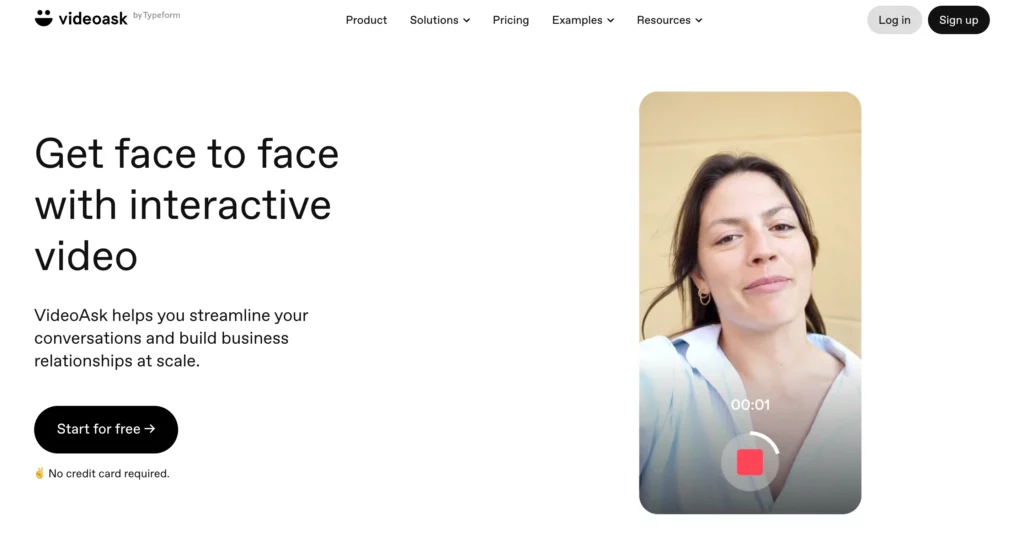
VideoAsk, from Typeform, is a conversational video tool designed to generate leads and sort them out through personal video interactions.
So, instead of just using those static forms that never seem to change or old-fashioned chat boxes, VideoAsk lets you say hello to people with a short video. And then you can ask them to reply with text, audio, or even a video of their own.
This makes everything feel more human and like you are having a real conversation, which is why it can be really good at building trust right away.
You can place VideoAsk on landing pages, product pages, or even in emails. Then, you can use branching logic, which is like choosing your own adventure, to send people down different paths depending on how they answer. It also integrates with CRMs and calendars, as well as other tools, enabling more efficient lead routing and management.
VideoAsk is really helpful for things like expensive products, consultations, and personal brands, because in those situations, making a connection and building trust are super important for getting someone to buy.
What Makes VideoAsk Different:
✔ Lead Capture That Feels Human: Video is just a lot more personal and engaging than regular forms are.
✔ Conversations That Go Both Ways: You can collect answers through text, audio, or video. This can give you a better idea of who someone really is.
✔ Flows Based on Logic: Send users down different paths depending on what they say.
✔ Engagement That Builds Trust: Great for services, coaching, and those expensive offers where trust makes all the difference.
✔ Integrations That Are Seamless: Connect to CRMs, calendars, and tools that automate things for a smooth workflow.
16. Apollo.io
Apollo.io is a B2B lead generation and outreach platform that brings together a large contact database with built-in sales engagement tools.
It lets you find verified contacts based on filters. Filters like job title, company size, the industry someone is in, and even intent signals; then you can reach out to them directly.
You reach out using email sequences and also LinkedIn workflows.
Apollo also includes features for enrichment and tracking, which can help you build more targeted lists and prioritize leads based on engagement and buying signals.
It is especially useful for outbound teams who want both data and execution all in one platform. Instead of having to rely on a bunch of different tools.
Why Apollo.io Stands Out:
✔ Large B2B Database: You can access millions of verified contacts across different industries.
✔ Built-In Outreach: Email and LinkedIn sequences, all in one platform, are a great help.
✔ Advanced Filtering: Good for targeting leads, based on things like firmographics, roles, and also intent.
✔ Data + Execution Combined: You can find and contact leads without having to switch between different tools. This saves some time, too.
✔ Lead Enrichment: It can enhance data quality, which means better targeting and segmentation of your leads.
17. Clearbit
Clearbit, now part of HubSpot, is a B2B data enrichment and intelligence tool that helps you turn basic lead information into detailed, actionable profiles.
By enriching emails or domains, Clearbit adds company data, job roles, industry details, and firmographic insights, allowing you to better qualify, segment, and prioritize your leads.
It works seamlessly with forms, CRMs, and marketing tools, automatically enhancing incoming leads with additional data. This enables more personalized outreach, better targeting, and improved lead scoring.
Now, as part of HubSpot, Clearbit’s capabilities are increasingly integrated into a broader customer platform, making it even more powerful for teams that want unified data, automation, and reporting.
Why Clearbit Stands Out:
✔ Real-Time Enrichment: Instantly enhance lead data with company and firmographic details.
✔ Better Targeting: Segment and prioritize leads based on enriched data.
✔ Personalization at Scale: Improve messaging using deeper insights into your audience.
✔ Seamless HubSpot Integration: Native connection with HubSpot’s CRM and automation tools.
✔ Strong B2B Focus: Ideal for account-based marketing and sales workflows.
18. Drift
Drift, which is now part of Salesloft, is a conversational marketing and sales platform. It is designed to capture leads, qualify them, and then convert them through real-time chat.
Instead of folks filling out the usual static forms, Drift uses AI to power chat-based conversations. This engages site visitors right away, answers their questions, and guides them toward whatever the next logical step is in your sales funnel.
The platform lets you automatically qualify leads and route them to the correct team member.
You can even book meetings right in the chat window, and the idea is to reduce friction and speed up the entire sales process.
Integrated into Salesloft, Drift is one part of what is now a larger revenue platform that combines conversational engagement with sales workflows and pipeline management.
Drift is particularly effective for B2B and SaaS companies. These companies rely on booking product demos and want to convert high-intent visitors while they are still active on their website.
What Makes Drift Different:
✔ Conversations Happen in Real-Time: Customers get immediate engagement and are converted then, not later, after filling out a form.
✔ AI Handles Qualification: Leads are automatically qualified and guided via artificial intelligence through the sales funnel.
✔ Meeting Booking is Built-In: Conversations turn into scheduled calls without anyone leaving the chat window.
✔ Smart Routing: Prospects get directed to the correct team using their responses and intent.
✔ Salesloft Integration: Chat integrates with broader sales workflows across the platform.
19. Zapier
Zapier is a no-code automation platform. What it really does is connect your lead-generation tools and ensure data flows smoothly throughout your entire funnel.
Instead of manually moving leads between platforms, Zapier lets you automate workflows. For example, it can send form submissions to your CRM. Or it can trigger email sequences. It can even notify your team when you capture new leads.
And it supports a large number of integrations, which makes it easy to connect landing page builders, CRMs, and outreach tools. Connecting to analytics platforms is also possible without needing custom development. It supports thousands of integrations.
Zapier has also moved beyond simple automations. It has added features such as Interfaces and Tables. These allow you to build lightweight internal tools that manage data directly within the platform.
It has also added AI-assisted workflow creation, which is supposed to help you set up automations faster.
Zapier is essential for scaling lead-generation systems because it eliminates manual work. And it ensures no lead gets lost across the various tools you might be using.
Why Zapier Is a Good Choice:
✔ No-Code Automation: You can connect tools and automate workflows, without needing developers.
✔ Huge Integration Library: It works with thousands of apps across your stack.
✔ Lead Flow Automation: It will automatically move and process leads between your tools.
✔ AI-Assisted Setup: Build workflows much faster due to the AI suggestions and automation support.
✔ Interfaces & Tables: You can create internal tools; also, manage all data within Zapier.
✔ It Eliminates Manual Work: This reduces errors, and it just makes sure consistent lead handling is performed.
20. Clay
Clay is a modern lead generation and enrichment platform that helps you find, qualify, and automate outreach to high-quality prospects using data and workflows.
It allows you to pull data from multiple sources, enrich leads with detailed information, and build automated workflows for prospecting and outreach, all in one interface.
Clay stands out by combining data enrichment, automation, and AI into a single system, making it easier to build highly targeted lead lists and personalized campaigns at scale.
It’s especially powerful for B2B teams and growth marketers who want more control and flexibility than traditional tools offer.
Why Clay Stands Out:
✔ Multi-Source Data Enrichment: Combine data from multiple providers for deeper lead insights.
✔ Workflow Automation: Build automated prospecting and enrichment flows.
✔ Highly Customizable: Create tailored lead generation systems based on your needs.
✔ AI-Powered Workflows: Use AI to enhance targeting and personalization.
✔ Built for Modern Outbound: Ideal for growth teams and advanced lead generation strategies.
21. Zoho CRM
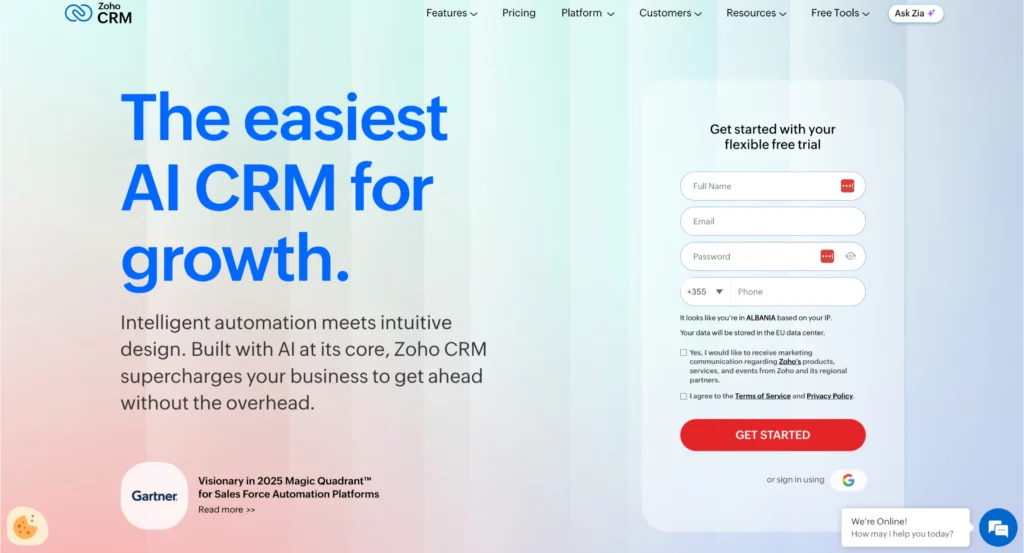
Zoho CRM is a comprehensive customer relationship management platform designed to help businesses capture, manage, and convert leads across multiple channels.
It allows you to collect leads through web forms, live chat, social media, and email campaigns, all of which feed directly into a centralized system where leads can be tracked, scored, and nurtured.
Zoho stands out for its flexibility and ecosystem. It offers a wide range of tools, including marketing automation, email campaigns, analytics, and workflow automation, making it possible to manage the entire lead generation and sales process within one platform.
The platform also includes AI-powered features through Zia, which can analyze lead behavior, predict conversions, and suggest the best actions to move deals forward.
Zoho is especially well-suited for small to mid-sized businesses that want a powerful alternative to more expensive platforms, without sacrificing functionality.
Why Zoho CRM Stands Out:
✔ Multi-Channel Lead Capture: Collect leads from forms, chat, email, and social media.
✔ AI Assistant (Zia): Predict lead quality, suggest actions, and automate insights.
✔ Flexible Ecosystem: Access a wide range of tools for marketing, sales, and automation.
✔ Workflow Automation: Automate follow-ups, lead scoring, and pipeline management.
✔ Cost-Effective Alternative: Strong capabilities at a more accessible price point than competitors.
Final Thoughts: Building Your Lead Generation Stack
There is no single tool that solves lead generation all by itself, and that’s the reason your tech stack matters. It really does.
The most effective setups combine different tools, each handling a different part of the funnel. This means capturing leads, qualifying them, nurturing them, and converting them into customers. That is the goal, after all.
Some tools in this list help you attract and capture leads using forms, landing pages, and even chat functionality. Other tools might focus more on outreach, automation, enrichment, or even just conversion.
The advantage you gain, the real advantage, really comes from how these tools work together with each other.
Start by identifying your biggest bottleneck.
Are you struggling to capture enough leads, qualify the ones you do get, or follow up fast enough after they come in? Then you can choose the right tools to solve your specific problem and connect them so they create a system that flows smoothly.
Lead generation is not just about, let’s say, ‘getting more traffic’ now. It is really about building a process, and that process should turn general attention into results that you can actually measure.
Frequently Asked Questions
What is lead generation, and why is it important?
Lead generation is the process of attracting and converting potential customers into people who have shown interest in your product or service. It is a critical part of any marketing strategy because it directly impacts your pipeline, conversions, and overall revenue.
How do I choose the right lead generation tools for my business?
Start by identifying where your funnel needs improvement, whether that’s capturing leads, nurturing them, or improving follow-up.
Then choose tools that solve those specific problems and integrate well with your existing setup. Your business model, team size, and budget should also guide your decisions.
Can I use multiple lead generation tools together?
Yes, and in most cases, you should.
The most effective lead generation systems combine multiple tools, each handling a specific role such as capturing leads, enriching data, automating workflows, or managing communication.
The key is making sure your tools are connected so data flows smoothly across your funnel.
Turn Your Traffic Into Leads
Choosing the right tools is only the first step. Start capturing and converting leads with high-performing landing pages and funnels using LanderLab.